Santorini grows food in conditions that should not support agriculture at all. No rivers, almost no rain, relentless wind, and soil that is essentially volcanic ash. What comes out of it is some of the most distinctive produce in the Mediterranean — wines that taste of the rock they grew in, tomatoes so concentrated they were once exported as paste, and vines trained into baskets in a technique found nowhere else on earth.
This guide covers the culinary side of the island: what the wine actually is and why, which grapes and dishes are worth seeking out, how tastings work, and how food-focused santorini tours fit into a stay. It is the half of the island most visitors walk past on their way to a viewpoint.
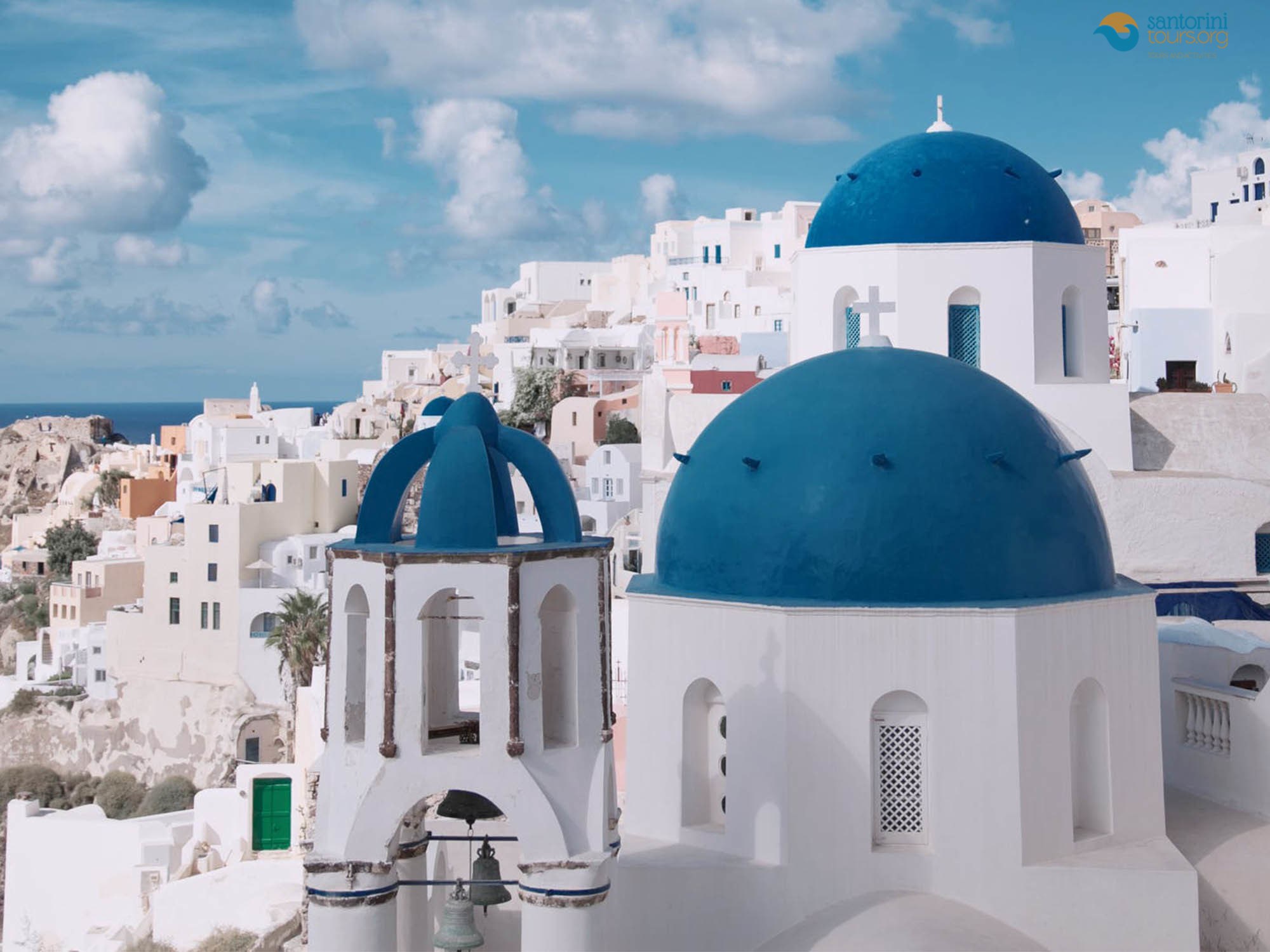
For travellers planning the island, santorini tours and santorini tours offer expertly guided experiences across Santorini — from caldera sunsets and volcano walks to private wine tastings and tailor-made sightseeing.
What Do Wine-Focused Santorini Tours Cover?
Two or three wineries with tastings, usually paired with local dishes, across a half day of four to five hours.
A typical route on wine santorini tours visits an estate with a vineyard walk, a larger commercial winery with a tasting room and a view, and often a smaller family producer. Tastings run three to five wines each, and the better operators include food — fava, tomato fritters, capers, local cheeses — rather than crackers.
Prices run €90–€140 per person for a half day, with tasting fees sometimes included and sometimes not. Full-day santorini tours combining wine with the caldera villages or Akrotiri run longer and cost more, and they are the better choice on a short stay where a dedicated wine afternoon cannot be justified.
Why Is The Wine On Santorini Tours Different?
Because the vines grow in volcanic ash, get their water from night humidity rather than rain, and have never been grafted.
The island santorini tours cross receives around 350mm of rain a year, almost all of it in winter, and has no surface water. What keeps the vines alive is the pumice and ash soil, which absorbs moisture from the night air and releases it slowly to the roots. It is an agricultural system running on fog.
The same soil is inhospitable to phylloxera, the root louse that destroyed most of Europe’s vineyards in the nineteenth century and forced growers everywhere else to graft onto American rootstock. Santorini’s vines are ungrafted and some root systems are several centuries old, which is genuinely rare. Guides on wine santorini tours make this the centrepiece, and it deserves to be.
What Is Kouloura On Santorini Tours?
The basket-training method — vines woven into a low circular nest with the fruit growing inside it, protected from the wind.
Instead of trellising vines upward, growers here coil the canes into a flat ring on the ground and let the grapes hang inside the hollow centre. The basket shields the fruit from the meltemi, which would otherwise strip it, and from direct sun, and it traps the night moisture the plant depends on.
It is labour-intensive, cannot be mechanised, and has to be rewoven as the vine grows. Seeing the fields on santorini tours is the moment the wine stops being an abstraction — the vineyards look like rows of grey birds’ nests rather than anything most visitors recognise as viticulture.
What Is Assyrtiko On Santorini Tours?
The island’s signature white grape: mineral, bone-dry, high in acidity, and unlike anything from mainland Greece.
On santorini tours the Assyrtiko holds its acidity even in extreme heat, which is unusual and is why it works here. The wines are austere rather than fruity — citrus, salt, flint, a long finish — and they age far better than most people expect of a Greek white.
It is the reason sommeliers take the island seriously, and the reason a tasting here is worth an afternoon rather than a stop. Every winery on the wine santorini tours circuit will pour several expressions of it, from stainless-steel to oaked to the sweet Vinsanto.
What Is Vinsanto?
The island’s sun-dried sweet wine, made from Assyrtiko and Aidani grapes left in the sun for up to two weeks before pressing.
Read more: Oia Santorini Private Guided Tour
For santorini tours the drying concentrates the sugars, and the wine is then aged in oak for a minimum of two years and often far longer. The result is amber, intensely sweet but held together by the same acidity that defines the dry wines, with notes of dried fig, caramel and orange peel.
It predates the better-known Italian Vin Santo and the name may well have travelled in the other direction. It is served at the end of tastings on santorini tours and is the bottle most visitors end up carrying home.
Which Other Grapes Should You Try?
Athiri and Aidani among the whites, Mandilaria and Mavrotragano among the reds.
On santorini tours Athiri and Aidani are usually blended with Assyrtiko to soften its austerity and add aromatics. Mandilaria is the workhorse red — tannic, deeply coloured, historically used for blending. Mavrotragano is the interesting one: nearly extinct forty years ago, revived by a handful of growers, and now producing serious structured reds.
Very few visitors ask about the reds, which is a shame. If a tasting on your santorini tours includes a Mavrotragano, it is usually the most surprising wine of the day.
How Do Tastings On Santorini Tours Work?
Seated, three to five wines, forty-five minutes to an hour, often with a view and usually with food.
On santorini tours most estates run a paid tasting flight rather than free pours — €15–€25 depending on the wines. Larger commercial wineries have terraces overlooking the caldera or the vineyards and run tastings on a schedule; smaller family producers are more informal and often more interesting.
Because tastings are scheduled, a winery cannot usually be added to a day on the spot in July and August. Wine santorini tours book the slots in advance, which is one of the practical reasons to take one rather than improvise.
Why Can’t You Drive Yourself To The Wineries?
Greece’s blood-alcohol limit is 0.05%, dropping to 0.02% for drivers with under two years’ experience — and a three-winery route is a dozen pours.
For self-driven santorini tours enforcement on the island is real, and the roads between the wineries are winding and unlit at night. Spitting is possible but few visitors do it, and the point of a tasting is somewhat undermined by not swallowing.
This is the single clearest case for booking rather than self-driving. Wine-focused santorini tours exist as a category largely because the alternative is either illegal or unenjoyable, and it is the one itinerary where a driver is not a convenience but a requirement.
Read more: Mpaxedes Santorini Private Guided Transfers
Where Do Santorini Tours Find The Wineries?
Clustered around Pyrgos, Megalochori, Exo Gonia and the road south toward Akrotiri.
The belt runs across the island’s gentler eastern slope where the ash is deepest, which is also where most of the inland villages sit. That geography is why anticlockwise santorini tours work so well: the caldera villages in the cool morning, Akrotiri through the middle of the day, and the wineries on the way back in the late afternoon.
Nothing is far. Pyrgos to Megalochori is ten minutes, and the whole belt spans perhaps fifteen kilometres.
When Is The Best Time For Wine Santorini Tours?
Late afternoon on any day; May, June, September or October for the season.
On santorini tours the afternoon slot matters because a tasting works as a wind-down rather than an interruption, the heat has dropped, and the light across the vineyards is at its best. A tasting at eleven in the morning after two village stops rarely lands well.
Seasonally, the shoulder months are quieter and the estates give more attention. The harvest — unusually early here, beginning in the first half of August because of the heat — is genuinely interesting to witness, though the wineries are at their busiest and least contemplative. Wine santorini tours in May or October are the most relaxed version.
What Food Do Santorini Tours Show You?
Fava, tomatokeftedes, white aubergine, capers and caper leaves, chloro cheese, and the small Santorini tomato.
On food santorini tours the fava is not broad beans but yellow split peas grown on the island, served as a warm purée with olive oil, capers and raw onion. It has PDO status and the local version is markedly better than mainland imitations.
Tomatokeftedes are fritters made from the tiny, intensely sweet Santorini tomato — a variety that adapted to the drought by concentrating its sugars. White aubergine is milder and sweeter than the purple kind and is often served simply grilled. Chloro is a fresh goat cheese made only here. Any decent food-focused stop on santorini tours will cover most of these.
What Is The Santorini Tomato?
A small, thick-skinned, intensely flavoured variety adapted to grow with essentially no water.
Long before santorini tours, tomato paste was one of the island’s main exports, and canneries operated along the south coast. The variety survives because it has no commercial value at scale — it is too small and too low-yielding — but the flavour is concentrated in a way irrigated tomatoes never achieve.
The Tomato Industrial Museum at Vlychada, in a converted cannery, tells that story well and takes about forty minutes. Very few santorini tours include it, which is a pity because it is the clearest window onto what the island did before visitors arrived.
Read more: Monolithos Santorini Private Guided Transfers
Where Should You Eat Between Santorini Tours?
Inland at Pyrgos, Megalochori or Exo Gonia; at Ammoudi for fish; at Vlychada for a beach lunch.
On santorini tours the rule of thumb is that view and food trade against each other. Restaurants on the caldera rim charge for the outlook and the cooking is usually competent rather than memorable. The better kitchens are inland, where rents are lower and the customers are more often local.
Ask the driver on your santorini tours where they eat — local guides know which places are good rather than merely well-placed, and the answer is almost never the restaurant with the best terrace.
Is Ammoudi Worth The Steps For Fish?
Yes, for a proper lunch — not as a quick stop.
On santorini tours Ammoudi is the old fishing harbour below Oia, reached by around three hundred steps or a short drive round. A row of tavernas sits at the water’s edge beneath the red cliff, serving whatever came in that morning, priced by weight.
The climb back up in full sun after a large lunch is the consideration, and it is why santorini tours that include Ammoudi usually drive down. Book ahead in season for the sunset tables.
How Much Should You Budget For Food On Santorini Tours?
€15–€25 for a taverna lunch, €35–€60 for dinner with a caldera view, €15–€25 per winery tasting.
Lunch and tastings are excluded from the quoted price of santorini tours on almost all santorini tours, and together with archaeological entry and the cable car they add €30–€60 per person to a full day. Rebuild any quote with those included before comparing two listings.
Fish at Ammoudi is priced by the kilo and can run considerably higher than a standard taverna bill — worth asking the price before the fish is cooked rather than after.
Can Santorini Tours Combine Wine With Sightseeing?
Yes, and on a short stay it is the better arrangement.
Combined santorini tours covering Oia early, Akrotiri through the midday heat, a winery in the late afternoon and a viewpoint at sunset delivers the island’s range without needing a separate wine day. The geography cooperates, because the winery belt sits between the archaeological south and the caldera rim.
Read more: Mesaria Santorini Private Guided Transfers
A dedicated wine half-day makes more sense on a longer stay or a second visit, when the caldera circuit is already covered. Among santorini tours, the combined day is the most commonly booked for exactly this reason.
What About Cooking Classes And Food Walks?
Both exist, both are small-scale, and both need booking well ahead.
Alongside santorini tours, cooking classes typically run three to four hours at a farm or a village kitchen, covering fava, tomatokeftedes and a main dish, usually with a market or garden visit first. Food walks are rarer here than in Athens because the villages are small, but a few operators run tasting walks through Pyrgos or Megalochori.
They suit travellers who have already done the standard santorini tours and want something slower. Group sizes are genuinely small — six to ten — so availability is limited in July and August.
Is The Harvest Worth Timing A Trip Around?
Interesting to witness, but not a reason to choose August over September.
For santorini tours the harvest begins unusually early — the first half of August — because the heat pushes ripening forward. Picking is done by hand at dawn, and some estates let visitors watch or briefly participate.
The trade-off is that August is the island’s most crowded and expensive fortnight, and the wineries are at their busiest. For most visitors a September tasting, with the wine already in tank and the estate calm, is the better experience. Wine santorini tours run identically in both months.
Can You Take Wine Home?
Yes, and buying at the winery is both cheaper and better chosen than at the airport.
After santorini tours bottles travel fine in hold luggage with reasonable packing, and most estates will wrap them. EU travellers face no limits; others should check allowances. Cruise passengers should check the ship’s policy on alcohol carried aboard, which varies by line.
Vinsanto is the bottle most people take, and it is the one least likely to be available at home. Operators running santorini tours will usually make a stop at the end for exactly this.
What Else Is Worth Bringing Back From Santorini Tours?
Dried fava, caper leaves in brine, tomato paste from the local variety, and capers.
All of them weigh nothing after santorini tours, travel well and are genuinely difficult to find outside the island. The fava in particular is a different product from what mainland shops sell under the same name.
Read more: Mesa Gonia Santorini Private Guided Transfers
Most food-focused santorini tours include a stop where these are available. What to skip: the mass-produced ceramics and jewellery on Fira’s main shopping street, which are largely imported and priced for a captive market.
Are Wine Santorini Tours Suitable For Non-Drinkers?
Partly — the vineyard walk and the geology are genuinely interesting regardless.
On santorini tours the kouloura training, the ungrafted vines, the ash soil and the drought agriculture stand on their own as a story about how the island works. Several estates also produce juice and offer food pairings, and nobody is obliged to drink.
That said, a non-drinker on a three-winery route will run out of interest by the third stop. A better arrangement on santorini tours is one winery folded into a general sightseeing day rather than a dedicated wine afternoon.
Santorini from the air: the caldera, the villages and the cliffs.
How Did The Island’s Wine Industry Survive?
By being commercially marginal for long enough that nobody replanted it.
Santorini’s vineyards produce tiny yields — a fraction of what an irrigated mainland vineyard delivers — because the vines are drought-stressed and hand-worked. For most of the twentieth century that made the industry uneconomic, and the island exported bulk wine and tomato paste rather than bottled product.
The accidental consequence is that the old vines and the old training method were never torn out in favour of something more productive. When international interest in Assyrtiko arrived in the 1990s, the raw material was still there, centuries old and ungrafted.
The pressure now runs the other way: vineyard land is worth more with a hotel on it than with vines, and the planted area has been shrinking for decades. Guides on wine santorini tours raise this, and it gives the tasting a sharper edge than a straightforward heritage story would.
What Does A Vineyard Walk Show You?
The kouloura baskets up close, the depth of the ash, and how little green there is.
A vineyard on santorini tours does not look like a vineyard. There are no rows of trellised vines, no irrigation lines and very little foliage — just low grey coils spaced widely across pale volcanic ground, which to an untrained eye reads as abandoned scrub.
Standing in one is what makes the wine make sense. The spacing is dictated by water: each plant needs a wide catchment of ash to draw night moisture from, so density is a fraction of a conventional vineyard. The baskets are rewoven by hand as the vine grows, a skill passed down and increasingly hard to hire for.
Read more: Santorini Tours
Not every estate offers the walk, and it is worth asking. Among wine santorini tours it is the element that most consistently turns a pleasant tasting into an explanation of the island.
What Should You Ask At A Tasting?
Vine age, whether the parcel is ungrafted, the altitude, and how the wine was aged.
On santorini tours those four questions get past the script. Vine age varies enormously — some parcels are seventy years old, some are several hundred — and older vines produce more concentrated fruit in smaller quantities. Altitude matters on an island this small because the eastern slope is meaningfully cooler than the caldera edge.
Ageing is where the styles diverge most: stainless steel gives the sharp, saline expression most people associate with Assyrtiko, while oak and extended lees contact produce something rounder that surprises visitors expecting austerity.
Estates enjoy these questions, and the answers are what distinguish one bottle from another on santorini tours where four or five wines can otherwise blur together.
How Does Santorini Wine Compare To Other Greek Regions?
Sharper and more mineral than Peloponnese or Macedonian whites, and priced considerably higher.
Compared with santorini tours, mainland Greek whites — Moschofilero from Mantinia, Malagousia from the north — tend toward aromatics and softness. Assyrtiko goes the other way: high acid, low aromatics, a salinity that people describe as sea spray or wet stone.
The price gap is real and reflects the yields rather than marketing. A bottle of good Santorini Assyrtiko costs two to three times a comparable mainland white because the vineyard produces a fraction as much fruit per hectare.
For visitors doing several Greek islands, this is the tasting to prioritise. Nowhere else in the country produces anything close, which is why wine santorini tours are worth an afternoon even for people who would not normally book one.
What Happens On A Food-Focused Tour?
A farm or garden visit, two or three tasting stops, and often a cooking demonstration or a shared meal.
Food-led santorini tours are less standardised than wine routes. A typical shape is a morning at a farm growing the small tomato and white aubergine, a stop for fava and local cheese, a bakery or a caper producer, and a long lunch built around what was seen.
Group sizes are small — six to ten — because the stops are working premises rather than tasting rooms. That also means booking well ahead, particularly in July and August when availability on food santorini tours is genuinely limited.
Read more: Santorini Private Transfers Services
They suit second-time visitors and anyone who found the caldera circuit less interesting than expected.
Frequently Asked Questions About Wine And Food
How Many Wineries In One Tour?
Two or three. Four is too many — the palate tires and the afternoon runs long. Most santorini tours settle on three.
Are Tasting Fees Included?
Sometimes. Ask specifically, because €15–€25 per estate across three stops is a meaningful addition to the headline price.
Do Wineries Serve Food?
Most offer pairings; a few serve full meals. Confirm before booking if lunch is meant to be covered.
Is Assyrtiko Expensive?
€15–€30 a bottle at the winery for a good one, more for aged or single-vineyard bottlings. Vinsanto runs higher.
Can You Visit Wineries Without A Tour?
Yes, with a designated driver or a taxi. Most take walk-ins outside peak season, but tastings are scheduled in July and August.
Which Winery Is Best?
There is no consensus, and the smaller family estates are frequently the most memorable. Ask the operator running your santorini tours which they rate rather than picking by name recognition.
How Do You Fit Wine Into A Three-Night Stay?
Fold one winery into the land day rather than booking a separate wine afternoon.
On three nights the santorini tours pattern is a land day, a sea day and a free day. Adding a dedicated wine half-day means giving up the free one, and the free day is consistently what visitors say they valued most.
The geography makes the fold-in easy. The winery belt around Pyrgos and Megalochori sits between the archaeological south and the caldera rim, so an anticlockwise route passes it in the late afternoon at no cost in driving time. Most full-day santorini tours will add a tasting on request.
On five nights or more the calculation flips and a dedicated wine afternoon earns its place, particularly paired with a cooking class or a food walk the following morning.
Read more: Transfer From to Airport Port Oia Finikia
What Do The Estates Themselves Recommend?
Drink the young Assyrtiko cold, the aged one at cellar temperature, and give the Vinsanto time.
Winemakers on santorini tours consistently make two points to visitors. The first is that fridge-cold serving flattens a good Assyrtiko — the saline complexity only opens as it warms in the glass, so a bottle taken straight from ice is being wasted.
The second is that these wines age. The received wisdom that Greek whites are for drinking young does not hold on this island, and a five- or ten-year-old Assyrtiko is a different and often better wine. Several estates on the wine santorini tours circuit pour a library vintage alongside the current one specifically to demonstrate it.
Is A Sunset Winery Better Than Oia?
For anyone who has already seen Oia once, yes — comfortably.
Several estates on santorini tours have west-facing terraces facing west, and a tasting timed to finish at sunset delivers the same view as the Oia crush with a seat, a glass and no queue to leave afterwards.
It is not the postcard, and first-time visitors should probably see Oia at least once, early in the morning rather than at sunset. But as an evening, a winery terrace beats a crowded walkway, and santorini tours ending this way remove the single worst logistical moment of a standard itinerary.
What Is Chloro Cheese And Where Do You Find It?
A fresh, soft, faintly sour goat cheese made only on Santorini, and almost never exported.
Chloro is made in small quantities and eaten young, within days. It appears in tomatokeftedes, on bread with capers, and increasingly in restaurant dishes that pair it with the local tomato. The texture is closer to a young mizithra than to feta, and the flavour is mild with a clean acidity.
Because production is tiny and the shelf life is short, it does not travel and it is rarely on menus outside the island. Food-focused santorini tours will usually include it, and it is worth asking for at a taverna even when it is not on the written menu — many kitchens keep some.
The related product worth trying is the caper leaf rather than the caper itself: pickled, meatier than the bud, and used here in salads where other regions would use a leaf vegetable.
How Does The Volcanic Soil Change The Flavour?
It concentrates everything, because the plants are permanently water-stressed.
A tomato grown with irrigation is mostly water. A Santorini tomato, drawing what little moisture it can from ash and night humidity, ends up small, thick-skinned and dense with sugar and acid. The same principle runs through the fava, the capers and the white aubergine — lower yields, smaller fruit, considerably more flavour per gram.
Read more: Transfer Fromto Santorini Airport Port Villages Except Oia Finikia
In the wine this shows up as concentration and minerality rather than sweetness, because Assyrtiko holds its acid while the sugars build. It is the single mechanism behind everything distinctive the island produces, and a good guide on food or wine santorini tours will connect the tomato and the wine as two expressions of the same constraint.
It is also why the produce is expensive. Yields are a fraction of mainland equivalents and none of it can be scaled.
Are There Vegetarian And Vegan Options?
Unusually good ones — much of the traditional diet is plant-based by default.
Fava, tomatokeftedes, grilled white aubergine, caper salad, gigantes, dolmades and the various pulse-based dishes of Orthodox fasting cuisine are all naturally vegan or close to it. Greek fasting periods produced a substantial repertoire of dishes without animal products, and they remain on menus year-round.
The gap is at wineries, where pairings often lean on cheese and cured meat. Say so at booking and most estates will adapt without difficulty. Operators running santorini tours deal with this constantly and would far rather know in advance than discover it at the first pour.
What About Coffee And Breakfast?
Greek coffee, freddo espresso, and a bakery culture that opens later than visitors expect.
Freddo espresso and freddo cappuccino — shaken, iced, unsweetened unless requested — are what people actually drink here from May onward, and they are markedly better than the international chains’ equivalents. Traditional Greek coffee is served in the villages and is worth the ten minutes it takes to drink properly.
The practical note for anyone on an early start: shops and cafés outside Fira largely do not open before nine. Santorini tours departing at half past eight mean either arranging breakfast the night before or taking the first coffee at the first stop, which most drivers will factor in if asked.
Which Restaurants Are Worth Booking Ahead?
Anything with a caldera view at sunset, and the Ammoudi fish tavernas in season.
Sunset tables in Oia and Imerovigli need booking weeks ahead between June and September, and they are not included in any tour price. The premium for the view is substantial and the cooking is generally competent rather than exceptional — you are paying for the terrace, which is a legitimate thing to pay for once.
Ammoudi books up for the evening slots because the setting beneath the red cliff is genuinely special and the fish is landed locally. Elsewhere — Pyrgos, Megalochori, Exo Gonia, Vlychada — walk-ins are usually fine outside August.
Read more: Santorini Tour Buses
Ask the operator running your santorini tours to make the booking if the timing is tight; local companies do this routinely and have better luck than a foreign phone number.
How Do You Choose Between Wine Operators?
Ask which estates, whether a vineyard walk is included, whether tasting fees are covered, and what food comes with it.
Those four answers separate a genuine wine afternoon from a transfer between tasting rooms. Estate selection matters because the island’s producers range from large commercial operations with tour-bus terraces to family growers pouring in a courtyard, and a good route mixes the two rather than visiting three of the same kind.
The vineyard walk is the element most often omitted and the one that makes the day, because the kouloura baskets in the field explain everything the tasting room cannot. And the food question is practical: a route with three tastings and no substantial food is a difficult afternoon, particularly starting at three o’clock.
Across wine santorini tours, operators who answer all four precisely are the ones who have built the day deliberately rather than assembled it from whatever had availability.
What Is The Best Order For A Food And Wine Day?
Farm or market in the morning, lunch inland, wineries from mid-afternoon, sunset on a terrace.
Producing stops work best early while the growers are working and the light is good. A long inland lunch at Pyrgos or Exo Gonia sits naturally in the middle, and it should be treated as a stop rather than a refuelling break.
Tastings belong after the heat drops, from about half past three, when the palate is fresher and the vineyard light is at its best. Ending on a west-facing estate terrace turns the last tasting into the sunset without needing a separate viewpoint stop.
That shape uses the same anticlockwise logic as general santorini tours, and for the same reason — it puts every element at the hour that suits it rather than at the hour the schedule reached it.
The Short Version
Book a tasting for the late afternoon, not the morning. Take three wineries at most. Do not drive. Try a Mavrotragano if one is poured, and buy the Vinsanto at the estate rather than the airport. Eat inland rather than on the rim, and order the fava.
Santorini’s food and wine are the part of the island that cannot be photographed from a viewpoint, and they are the reason a lot of people come back. Of all the santorini tours available, the wine afternoon is the one that most reliably changes how visitors think about where they have been.
Do Santorini Tours Visit The Same Wineries?
Largely yes — the island has around fifteen working estates and the commercial routes cycle through the same six or seven.
That is not a criticism. The larger estates have the capacity, the scheduled tastings and the parking that a shared itinerary needs, and several of them are genuinely excellent. But it does mean two different operators frequently deliver a near-identical afternoon.
The smaller family producers are where the routes diverge, and they are usually the stop people remember. On private santorini tours they can be requested by name; on shared departures the estate list is fixed, so it is worth checking it before booking rather than after.
Read More
Discover more from Escortsmovies.gr:
- Affordable iGaming SEO Services: Dominate Search Rankings
- Escort Agency SEO: The Complete White-Hat Guide To Ranking
- Plumber Digital Marketing: The Complete Guide to Dominating Local Search and Growing Your Business
- SEO Services For Roofing Companies: A Playbook To Rank In The Map Pack And Win More Leads
- The Ultimate Guide to Canada Online Casino Bonuses
Contact
Santorinitours.org
Travel Agency In Greece
Karterados 847 00
6936914687