Your first trip to Greece can feel exciting and a little scary at the same time. There are ancient ruins, busy cities, bright islands and ferries to sort out. Greece tours take much of that weight off your shoulders. A good plan lets you enjoy the sun, the food and the history without stress.
This guide walks you through the big choices in plain words. You will learn how long to stay, where to go and how to get around. The team at My Greece Tours shares tips like these with new travelers all the time. Read on, and your first trip will feel much easier to plan.



Why Do Greece Tours Help First-Time Visitors?
Greece is a small country, but it has a lot to see. The mainland has mountains, old towns and famous ruins. Out at sea, there are thousands of islands. For a first visit, that much choice can feel heavy. A tour turns a long list of places into a clear plan you can follow.
A guide also explains what you are looking at. Ancient ruins can look like piles of stone if nobody tells the story. A good guide brings the old temples, theaters and markets back to life. You learn who built them, how people lived and why these places still matter today.
There is a legal side too. In Greece, only state-licensed guides may lead groups inside archaeological sites and museums. An archaeological site is a place where experts dig up and protect very old ruins. When you join a proper tour, you know your guide holds that official license.
Tours also save you time and worry. Someone else checks the ferry times, books the hotels and plans the drive. You do not need to read Greek road signs or guess where to park. That leaves more energy for the fun parts, like a long lunch by the sea.
Many travelers compare a few companies before they choose. Sites such as Greece tours and Tours In Greece show the kinds of trips on offer. Looking at a few options helps you see what fits your budget and your travel style. A sample day plan shows the real pace of a trip.
How Long Should Your First Greece Tours Last?
Time is the first big choice. Many first-time visitors try to see too much in too few days. They spend more time on ferries and in airports than on beaches. A slower pace almost always feels better. It gives you time to rest, eat well and enjoy each stop.
About a week works well for a short first trip. You can spend a few days in Athens and then visit one island. If you have ten days or two weeks, you can add a second island or a mainland trip. Longer Greece tours let you go deeper without rushing.
Athens is the natural starting point for most trips. Its main airport has the most flights, and the ancient sites sit close together. This Athens itinerary for first-timers shows how to fill a few days in the city. After that, you can head to the islands or the mainland.
Leave some slack on your first and last days. Long flights can leave you tired, so plan a gentle first evening. On the last day, stay close to the airport city. That way, a ferry delay cannot make you miss your flight home.
Think about the season as well. Summer brings hot days and big crowds at famous spots. Spring and autumn are often calmer and cooler for walking around ruins. Some ferries run less often outside summer, so your plan may change with the season. Here is a simple guide to trip length:
- Five or six days: Athens plus one nearby island.
- One week: Athens, one island and a day trip.
- Ten days: Athens, two islands or a mainland loop.
- Two weeks: Athens, the mainland and two islands.


Which Places Should First Greece Tours Include?
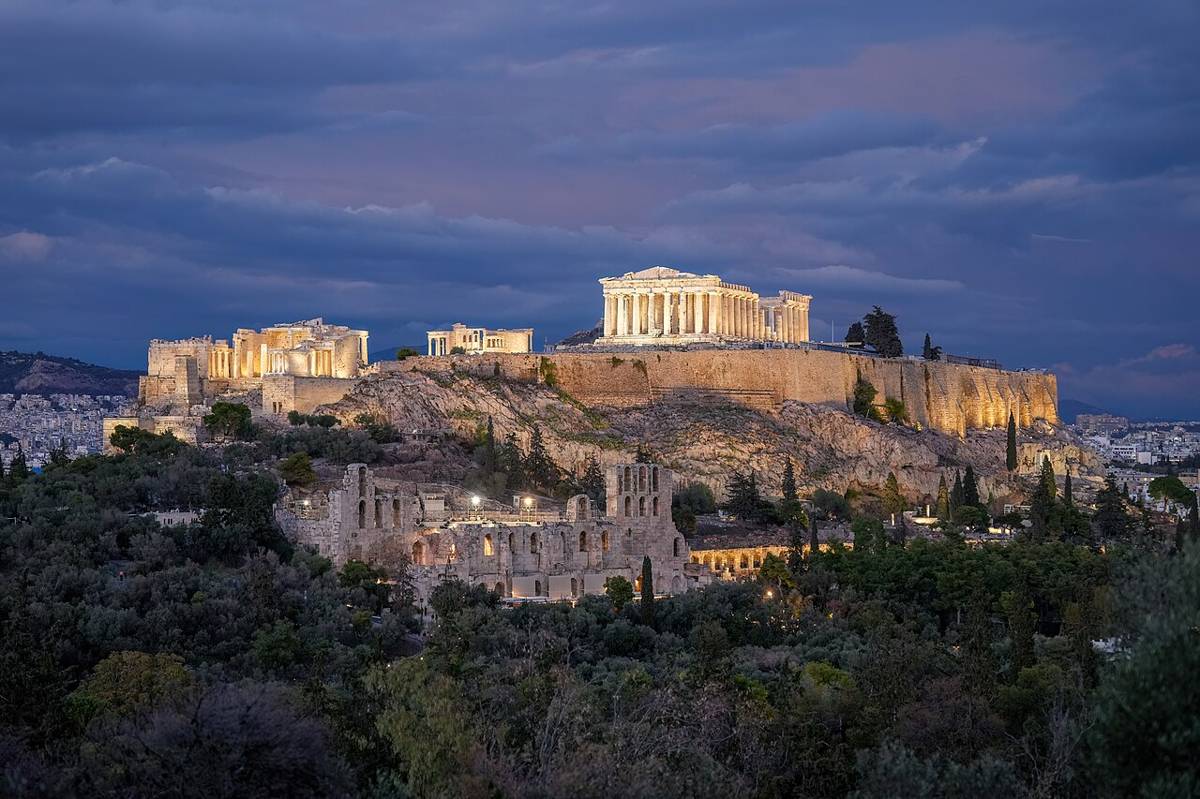
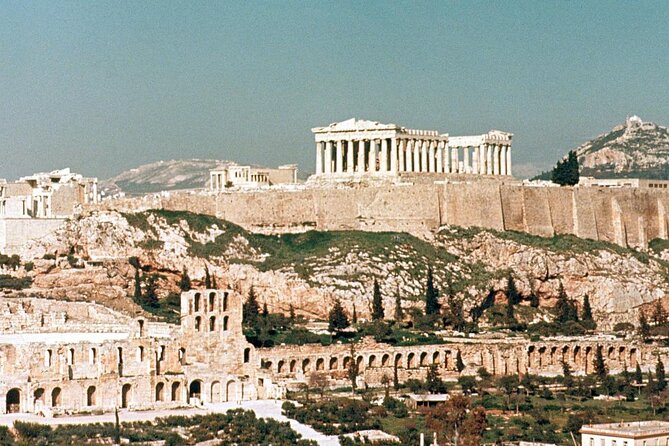
Athens should be on almost every first list. The Acropolis sits on a rocky hill above the city. Its most famous temple, the Parthenon, was built for the goddess Athena in ancient times. Nearby, the Acropolis Museum holds many of the statues and carvings found on the hill.
On the mainland, Delphi is a strong choice. The ancient Greeks believed it was the center of the world. People came from far away to ask a priestess about their future. Today, the ruins sit on a mountain slope with wide views over a valley full of olive trees.
Meteora is another favorite. Here, monasteries sit on top of tall rock pillars. A monastery is a home where monks or nuns live, pray and work. The views feel almost unreal, and many tours combine Meteora and Delphi in one trip from Athens. Bring good shoes, because there are steps to climb.
If you have more time, the Peloponnese is worth a look. This large peninsula lies west of Athens. Nafplio is a pretty seaside town that was once the first capital of modern Greece. Ancient Olympia, home of the first Olympic Games, is also in this region.
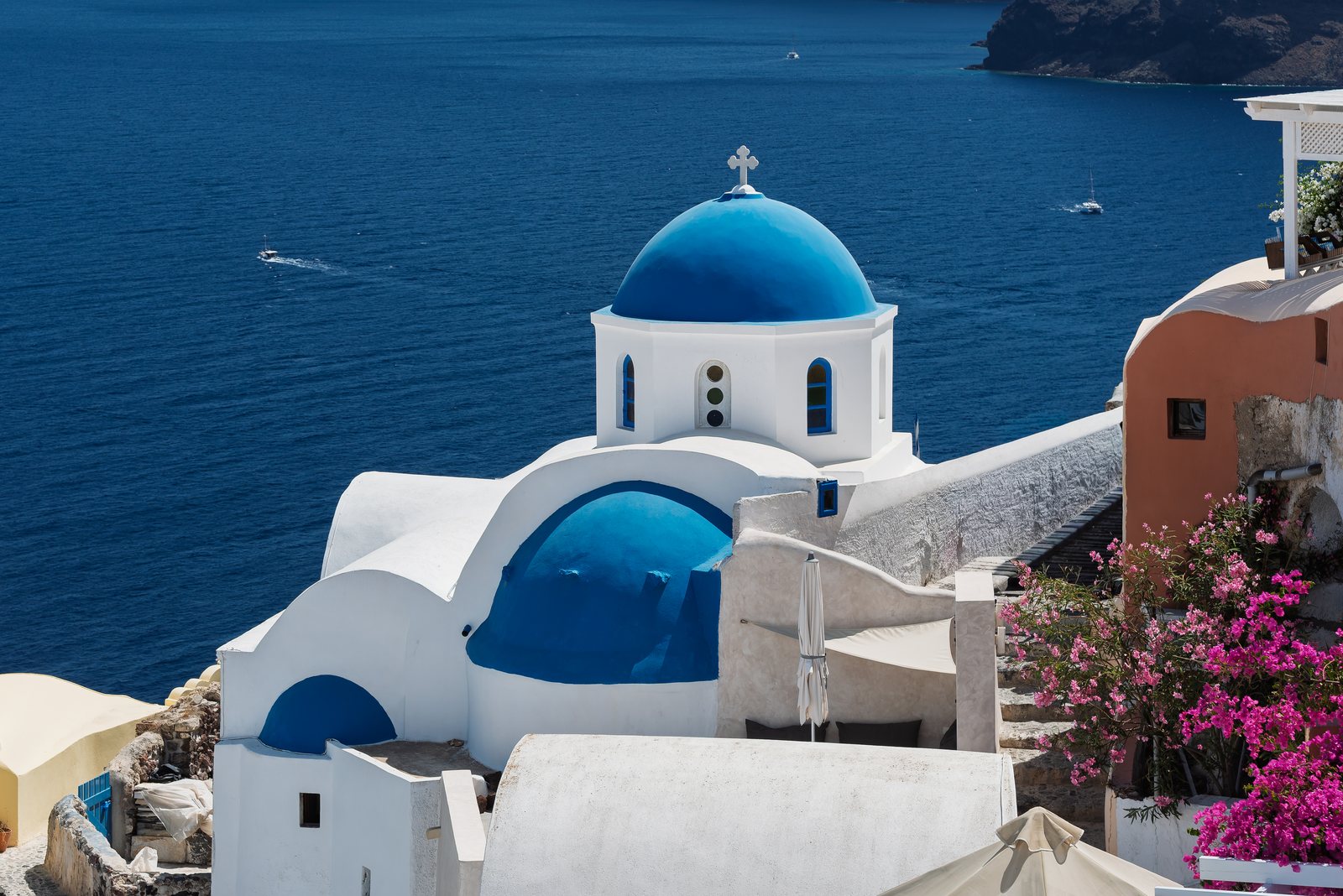
For the islands, most first-timers pick one of the well-known names. Santorini has white houses on cliffs above a huge flooded volcano. Crete is large, with beaches, mountains and the ancient palace of Knossos. This guide to Greek islands for first-timers compares the main choices in more detail.
Try not to pack every famous name into one trip. Two or three bases are plenty for a first visit. Each move takes a big piece of your day. Picking fewer places lets you enjoy a slow dinner, a quiet beach and the small moments that make Greece special.
Should First-Timers Pick Group, Small-Group Or Private Greece Tours?
Large group tours are often the cheapest choice. You travel on a big coach with many other people. Everything is planned, from hotels to meals. This style suits travelers who want a low price and do not mind a fixed schedule. You also meet people from many countries along the way.
Small-group tours keep the numbers lower. You may travel in a minibus with a handful of others. The guide has more time for your questions, and the group moves faster at each stop. Many first-timers find this a happy middle ground between price and comfort. It also feels more personal and relaxed.
Private Greece tours cost more, but they bend around you. You choose the start time, the pace and the stops. This suits families with young children, older travelers and anyone who wants a quiet trip. A private driver can also wait while you take a long swim or lunch.
Think honestly about how you like to travel. Do you enjoy meeting strangers, or do you prefer your own space? Do you want every detail planned, or some free time each day? Your answers point to the right style faster than any price list. Be honest, and the choice gets easy.
This guide on choosing the right Greek tour walks through these questions step by step. Read the tour plan closely before you pay. Check how long you spend on the road each day, since long drives can wear you out. Look at what is included, and what you must pay for yourself.



How Do Greece Tours Handle Transport Between Places?
Getting around is where tours really shine. On the mainland, most trips use coaches or minibuses with air conditioning. The roads between Athens, Delphi and Meteora are good, but the drives can be long. A tour driver knows the roads, the rest stops and the best places for lunch.
Island trips depend on ferries. The Cyclades are a group of islands in the Aegean Sea, including Santorini, Mykonos and Naxos. Most ferries to these islands leave from Piraeus, the main port of Athens. Fast boats save time, while big slow ferries feel calmer on rough seas.
Ferry plans can change because of strong winds. In summer, a dry wind called the meltemi can blow hard across the Aegean Sea. Good Greece tours build in extra time for this. Your guide or tour office will move you to a later boat if a sailing is canceled.
Flights are another option. Short flights link Athens with Crete, Santorini, Rhodes and other big islands. They save time when the distance is long. Check bag rules, since small planes may have limits. Many tours mix one flight with one or two ferries, which gives you speed and a chance to enjoy the sea.
If you travel on your own between tour parts, keep things simple. Book ferry tickets early in the busy season. Get to the port well before your boat leaves, because ports can be crowded and confusing. Keep your passport or ID card with you, since staff may check names against tickets.
What Should First-Time Visitors Know About Greek Customs?
Greek people are known for warm hospitality. The Greek word for this is philoxenia, which means love for strangers. Locals often treat visitors like guests in their own home. A friendly smile and a few kind words go a long way in shops, cafes and family-run hotels.
Dress matters when you visit churches and monasteries. Cover your shoulders and knees before you go inside. At Meteora, women are often asked to wear a long skirt, and wraps are usually handed out at the door. Speak quietly, and ask before you take photos of people or icons, which are holy paintings.
Meals in Greece are slow and social. Dinner often starts later than many visitors expect, and nobody will rush you out. Sharing plates in the middle of the table is normal. Tipping is welcome but not required, and many people simply round up the bill or leave some coins.
Some small habits can confuse new visitors. In Greek, the word for yes is nai, which sounds a bit like the English word no. An open palm pushed toward someone’s face is a rude gesture, so avoid waving that way. This page on cultural etiquette for Greece visitors covers more of these points.
Learning a few words also helps. Most people in tourist areas speak some English, and most Greece tours run in English. Still, a simple kalimera, which means good morning, or efharisto, which means thank you, earns big smiles. A short list of essential Greek phrases is easy to learn on the flight.


How Do You Book Greece Tours Without Stress?
Start by setting a clear budget. Include flights, the tour price, meals that are not covered and some spending money. Then decide which style of tour fits that budget. Having a firm limit in mind stops you from falling for a fancy trip you cannot really afford.
Next, read reviews from past travelers. Look for comments about the guides, the hotels and how well the trip ran. A few bad reviews are normal for any company. Watch for patterns, though, such as many people talking about late buses or hidden costs. Recent reviews tell you the most.
Check what the price includes before you pay. Some tours cover hotels, breakfast, transport and entrance tickets. Others leave tickets and most meals to you. Ask about the cancellation rules too. Travel insurance is a smart extra, since ferries, flights and health problems can all change your plans.
Book early for summer trips, especially if you want islands like Santorini or Mykonos. Popular tours and good hotels fill up fast in the warmest months. For spring and autumn trips, you usually have more time. Even then, booking a few months ahead gives you the best range of choices.
Finally, keep all your papers in one place. Save your booking emails, tickets and the tour company’s phone number on your phone. Print a copy too, in case your battery dies. With these details ready, you can relax and enjoy the trip instead of worrying. This small step saves real stress.
Conclusion: Your First Greece Tours, Made Simple
Planning a first trip to Greece does not need to be hard. Pick a sensible length, choose two or three bases and match the tour style to your travel habits. Start in Athens, add an island or the mainland, and leave room for slow meals and sunny afternoons.
Well-planned Greece tours handle the tricky parts for you. Licensed guides tell the stories behind the ruins, and drivers deal with roads and ports. You simply show up, stay curious and enjoy each new place. Your first visit may well be the start of many more.
Frequently Asked Questions About Greece Tours For First-Time Visitors
Are Greece tours a good idea for a first trip?
Yes, they are a great choice for most first-time visitors. A tour handles hotels, transport and guides, so you can focus on enjoying the trip. It also means a licensed guide can explain the ancient sites and their stories in plain words.
How many days do first Greece tours need?
About a week is a good minimum for a first visit. That gives you time for Athens and one island without rushing. With ten days or more, you can add a second island or a mainland trip to Delphi and Meteora.
Do Greece tours include entrance tickets?
It depends on the company and the tour. Some include tickets to sites like the Acropolis and Delphi, while others ask you to buy them yourself. Always check the list of what is included before you book, so the costs do not surprise you.
Which island suits a first Greece tour?
Santorini and Crete are both popular first choices. Santorini is small and famous for its views, while Crete is big and full of history, beaches and mountains. Naxos is a calmer pick for travelers who want fewer crowds.
Do you need to speak Greek on Greece tours?
No, you do not need to speak Greek. Most guides speak English well, and many people in hotels, shops and tourist areas do too. Learning a few simple words is still a kind gesture that locals enjoy.
When should first-time visitors book Greece tours?
Book as early as you can for summer trips, since popular tours and hotels fill quickly. Spring and autumn trips give you a bit more time. Booking early also gives you the widest choice of dates and prices.
What do Greece tours include for first-time visitors?
Most Greece tours include a licensed guide, transport between stops and a clear plan for the day. Entry tickets, meals and tips change from one tour to the next. First-timers should read the included list line by line before they pay for anything.
Guides, transport and entry
The guide is the heart of most Greece tours. Only state-licensed guides may lead groups inside Greek archaeological sites and museums. That rule means a first-timer hears checked facts, not guesswork, at places like the Acropolis or Delphi.
Larger groups often hand out small radio headsets so every guest can hear the guide clearly. This helps on busy paths where many groups talk at once. Small group tours often skip the headsets, because everyone can stand close to the guide.
Day trips from Athens often add a cool, comfortable coach or minivan with hotel pickup. Many Greece tours to Delphi, Mycenae or Meteora run this way. Driving alone on long mountain roads can tire a new visitor, so a coach seat is a real comfort.
Buyers can compare small group and private experiences to see what each style covers. A private tour gives more say over timing and stops. This look at personalized private travel shows how that extra freedom works.
Costs that sit outside the tour price
Entry tickets are the item that changes most from one listing to the next. Some Greece tours fold the ticket into the price, while others ask guests to buy it alone. A good listing states this in plain words.
Lunch, drinks, tips and small shopping costs sit outside most prices. Multi-day Greece tours often cover hotels and breakfast, but not every dinner. Travelers who compare escorted tour itineraries should check meals, rooms and free time side by side.
Hotel pickup is another point worth checking. Some Greece tours collect guests from central hotels only, while others ask everyone to meet at one fixed spot in the city. A hotel far from the center can mean an early taxi ride.
A cheap tour with nothing included can end up costing more than a pricier one with tickets built in. Simple math before booking keeps the budget honest. The question of whether Acropolis guided tours pay off comes down to the same math.


How much walking do Greece tours involve?
Most Greece tours involve a fair amount of walking, often on uneven stone, steep slopes and marble steps. Ancient sites have little shade, so heat adds to the effort. Guides set a steady pace and stop often to explain each spot along the way.
Sites with steep paths and old stone
The Acropolis sits on a rocky hill, and the path to the top climbs over worn marble. Centuries of feet have polished that stone, so it turns slick even when dry. Shoes with a firm grip make the climb much safer.
Delphi spreads up a mountainside, with the old stadium near the top of the site. Mycenae has a rough slope up to its ruined palace, and the Meteora monasteries sit high on rock towers. Greece tours that visit all three ask for steady legs.
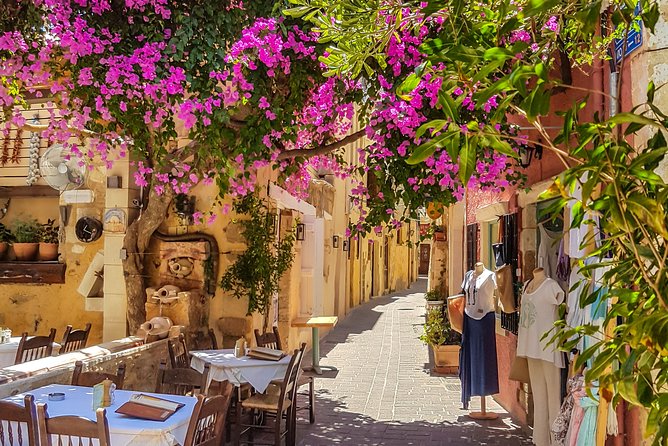
Old towns add their own effort, since the lanes of Plaka in Athens, Nafplio and many island villages use cobbles and steps. Walking tours on foot in these places cover less ground, but they still stay on hard, uneven paths.
Museum time counts as walking too. The Acropolis Museum and the National Archaeological Museum in Athens have large halls, and a full visit means hours on hard floors. Greece tours that pair a site with a museum add up to a long day on foot.
Shoes, water and pacing
Closed shoes or sturdy sandals with good soles beat flip-flops at every site. A hat, sunglasses and sun cream guard against the strong Greek sun. A refillable water bottle is the other must-have item for any guided day.
Light, loose clothes in cotton or linen help a great deal in the heat. A small backpack keeps both hands free on steep steps. Large bags slow things down at some museums, where staff ask guests to leave them in a cloakroom.
Summer heat in Greece can be fierce in the middle of the day. Many Greece tours start early in the morning to beat the worst of it. Travelers who feel dizzy should stop, rest in the shade and drink water slowly.
These basic safety tips for visitors cover heat and other common risks. Guests with knee or back trouble should tell the operator before booking. Good Greece tours can then suggest a shorter route or a site with flatter ground.
How do Greece tours handle tickets and queues at major sites?
Good Greece tours book entry tickets or time slots ahead and plan arrival around quieter hours. Licensed guides know the gates, the flow of crowds and the best order to see each site. That planning saves time in the long summer lines at the Acropolis.
Timed entry and tickets bought ahead
The Acropolis uses timed entry, so each ticket holds a set slot. Groups enter in their slot and move up the hill with the guide. This system spreads out crowds, but it leaves little room for late arrivals.
Visitors who go without a tour face the same timed rules. This guide to buying Acropolis tickets in advance explains why early booking helps in busy months. Greece tours handle this step for their guests, which removes one worry from a first trip.
Lines also form at security and at narrow points on the path. Many visitors do not know the Acropolis has a second entrance on the south slope. Simple ways to skip the Acropolis lines show what still works for those who go alone.
Combo tickets and quieter hours
Athens sells a combined ticket that covers the Acropolis and several other ancient sites. The Ancient Agora, the Roman Agora and Kerameikos, the old city cemetery, all sit on this pass. This page on the Acropolis combo ticket pass explains how it works.
Greece tours that spend more than a day in Athens often use this pass. It lets a group see smaller sites on a second morning without a new ticket line. It also keeps every ticket in one place, which suits a busy first trip.
Early morning and late afternoon bring the shortest lines in summer. Cruise ship groups tend to fill the Acropolis in the middle of the morning. Smart Greece tours plan around those waves, and solo visitors can copy the same timing.
Winter brings far shorter lines at almost every major site in the country. Some Greece tours run all year, and an off-season visit feels calm and relaxed. Sites do close earlier in the cooler months, so the day starts sooner.
What mistakes do first-time travelers make on Greece tours?
The most common mistakes on Greece tours are packing too much into each day, wearing the wrong shoes and ignoring dress codes. Many first-timers also skip the small print on meeting points. Each slip is easy to fix with a little planning.
Planning and packing mistakes
Too many Greece tours in a row can drain the fun out of a first trip. Back-to-back early starts leave no time to rest, swim or sit in a café. A free day between long tours keeps energy high.
Some first-timers also book a full-day tour for the day they land. A delayed flight can mean a missed start, so a light first day is the safer choice. Jet lag also makes a long guided day feel much harder.
Missing the meeting point is another classic slip on a first trip. Pickup spots in Athens can sit on busy squares or quiet side streets. Travelers should save the address, check the map the night before and arrive early.
Money mistakes also hurt, since some guests forget cash for small kiosks, village cafés or tips for the driver. These simple budget tips help first-timers spend well without missing the good parts.
Mistakes at the sites themselves
Rules at Greek sites protect very old stone, and guards enforce them. The list below covers the slips that guides on Greece tours see most often.
- Touching or sitting on ancient marble
- Bare shoulders or short shorts at monasteries
- Flying a drone without a permit
- Leaving the group without telling the guide
- Skipping water and sun cream on hot days
The Meteora monasteries ask for covered shoulders and knees, and women are often asked to wear a skirt. Many monasteries lend wraps at the door, but bringing one saves time. Good Greece tours warn guests about this the day before.
The Acropolis has its own set of slips, from the wrong shoes to a missed time slot. The guide to common Acropolis visitor mistakes lists them in detail. Reading it first makes Greece tours in Athens far smoother.
Which Greece tours cover Athens in the first days?
Most Greece tours for first-timers begin in Athens. The first days cover the Acropolis, the Acropolis Museum, Plaka, Monastiraki and the Ancient Agora, mostly on foot. These sights sit close together in the old center, so a walking group can reach all of them without a car.
What do Athens city tours show on day one?
A typical first morning starts at the Acropolis, the rocky hill above the city. Its best-known temple is the Parthenon, built for the goddess Athena. Good Greece tours go early, before the midday heat and the large cruise groups arrive.
Only state-licensed guides may lead groups inside Greek archaeological sites and museums. This rule keeps the stories accurate and the visits well run. A guide also points out the best photo spots and the quiet corners that most visitors walk past.
Private Greece tours of the Acropolis cost more than group walks, but they move at the guest’s own pace. Group tours are cheaper and still cover the main temples. Both types sell out fast in the busy summer months.
Next comes the Acropolis Museum at the foot of the hill. Glass floors show the ruins of an old neighborhood under the building, and the top floor looks straight at the Parthenon. Art fans can add more stops from this list of must-see museums in Athens.
How do Plaka, Monastiraki and the Ancient Agora fit in?
Below the Acropolis lies Plaka, an old quarter of narrow lanes, small shops and family tavernas. Next to it, Monastiraki has a busy square and a flea market. Many Greece tours end the first day here, with a slow walk and a long dinner.
The Ancient Agora was the main market and meeting place of old Athens. People came here to shop, trade news and talk about politics. Walking tours often link it with Greek myth sites in Athens. One example is the Temple of Hephaestus, the god of fire and metal work.
Food is part of the plan too. Short food walks stop for souvlaki, sesame bread rings called koulouri, and loukoumades, which are small fried dough balls with honey. This Athens street food guide lists more snacks to try.
On a later afternoon, many Greece tours drive along the coast to Cape Sounion. The Temple of Poseidon, the god of the sea, stands on a cliff above the water. Sunset there is a classic first-trip moment, and it tops most lists of day trip ideas from Athens.
Which Greece tours go from Athens to Delphi and Meteora?
Greece tours to Delphi and Meteora head north from Athens by coach, minivan or train. Delphi fits into a long day, while Meteora works best with a night in Kalambaka. Both places are UNESCO World Heritage sites, and each one shows a very different side of Greek history.
What do Delphi tours include?
Delphi sits high on the slopes of Mount Parnassus, and the ancient Greeks called it the center of the world. People traveled here to ask the oracle, a priestess who gave answers they believed came from the god Apollo.
Day Greece tours to Delphi spend a lot of time on the road. Still, the views of mountains and the wide olive groves below the site make the drive pleasant. Lunch often comes at a village taverna close to the ruins.
Guided Greece tours walk up the Sacred Way past the Temple of Apollo, the theater and the stadium. The site museum holds the bronze Charioteer, one of the best-known statues from ancient Greece. Comfortable shoes help, because the path climbs steeply.
On the way back, many Greece tours stop in Arachova, a mountain village of stone houses. It has cafés, local cheese and bright woven rugs, and in winter it fills with skiers heading to the slopes of Parnassus.
Why do Meteora tours stay overnight in Kalambaka?
Meteora is a group of tall rock pillars in central Greece, and monks built monasteries on top of them centuries ago. In the past, they pulled visitors and supplies up in nets and baskets on long ropes.
The trip from Athens is long, so overnight Greece tours sleep in Kalambaka, the town below the rocks. This leaves time for sunset views and a calm morning visit. Options are compared in this guide to Meteora day trips from Athens.
The monasteries are working religious houses, so dress rules apply. Men wear long trousers, and women wear skirts below the knee, with shoulders covered. The history of the Meteora monasteries explains how the first monks settled there.
Some Greece tours to Meteora add a sunset stop at a viewpoint above the rocks. Photographers love the soft light on the cliffs, and hikers can also join guided walks on old monk paths between the monasteries.
Which Greece tours explore the Peloponnese?
Greece tours of the Peloponnese cross the Corinth Canal to Mycenae, Epidaurus and Nafplio. Longer loops of several days add Olympia, home of the first Olympic Games. The Peloponnese is a large piece of land south-west of Athens, almost surrounded by sea.
What do Mycenae and Epidaurus day tours cover?
The first stop is the Corinth Canal, a narrow channel cut through solid rock with walls that drop straight down to the water. Ships use it to pass between two seas without sailing all the way around the Peloponnese.
Mycenae was a powerful city in the Bronze Age, a time before iron tools. Visitors walk through the Lion Gate and into a huge stone tomb shaped like a beehive. The treasures found at Mycenae include a gold mask once linked to King Agamemnon.
At Epidaurus, the ancient theater is famous for its sound. A coin dropped on the stage can be heard from the top rows. Guides often ask a guest to test it, and Greece tours rarely skip this stop.
Peloponnese Greece tours suit travelers who enjoy history and slow drives. The roads pass orange groves, olive trees and small farm towns. Summer days get hot, so good tours start early and plan shade breaks.
Why do longer Greece tours add Nafplio and Olympia?
Nafplio, the first capital of modern Greece, is a seaside town with a castle on the hill and a small fort in the harbor. Its old town has marble streets, ice cream shops and quiet squares for an evening walk.
Olympia is where the ancient Olympic Games began. Visitors can walk into the old stadium through a stone tunnel and see the Temple of Zeus. The Olympic flame is still lit here before each modern Games.
A classical tour from Athens links these places with Delphi and Meteora in one loop. It saves first-timers from planning hotels and drives. For a wider view, see the top archaeological sites in Greece.
Which Greece tours take first-timers to the islands?
Greece tours to the islands leave from Piraeus, the main port of Athens. First-timers often pick Santorini, Mykonos, Naxos or Paros, or take a day cruise to Hydra. Each island has its own mood, so matching it to the traveler matters more than famous names.
Which islands suit a first trip?
The main choices are easy to compare. Each one below can be reached by ferry from Piraeus port.
- Santorini: cliff-top villages and sunsets over an old volcano.
- Mykonos: white lanes, windmills, beaches and lively nights.
- Naxos: long sandy beaches, mountain villages and good farm food.
- Paros: fishing harbors, calm beaches and easy ferry links.
- Hydra: a car-free island close to Athens, with donkeys on the paths.
Santorini’s villages sit on the edge of a caldera, a huge bowl left after an old volcano blew apart. Island Greece tours there often add a sunset boat trip around the cliffs. Mykonos is better for beach days, shopping and nightlife.
Naxos and Paros sit close together, so Greece tours often pair them in one trip. Both feel calmer than Santorini and Mykonos, with fewer crowds and more space on the beaches.
How do ferries and island tours work from Athens?
Fast ferries save time but cost more and rock more in wind, while slow ferries are cheaper, roomier and steadier. This guide to ferry travel in Greece covers tickets, luggage and boarding.
In summer, a strong north wind called the meltemi can delay or cancel boats. Smart Greece tours leave a spare day before any flight home. Booking ferry seats early also helps in the busy months.
Island Greece tours for first-timers work best with fewer stops. Every island change takes time for packing, travel and waiting at the port. A slower plan leaves more time for beaches, villages and long lunches.
For travelers short on time, a day cruise from Athens stops at Hydra and nearby islands. Longer island Greece tours mix a few islands with fixed ferry tickets and hotel stays. The practical guide to island tours compares the main routes.
Which Greece tours suit first-time families?
The best Greece tours for first-time families mix short sightseeing days with beach time. They use one or two bases and keep travel days light, so children stay rested. A slow pace helps parents too. Fewer hotel changes mean less packing and fewer early starts.
Start in Athens with short, guided visits
Athens works well as a first stop for families. A morning at the Acropolis Museum shows real statues from the hill above. The building is cool and calm, which helps on hot days.
Many Greece tours for families add a short guided walk with stories made for kids. Only state-licensed guides may lead groups inside Greek archaeological sites and museums. That rule means the guide has passed official training in history and local sites.
Good guides keep their talks short and turn old myths into fun stories. Myths are the old tales of Greek gods and heroes, like Zeus and Hercules. Children often remember these stories long after the trip ends.
Before booking, parents can read these family-friendly Greece travel tips first. They cover stress-free planning, good places to stay and what to expect with young kids. Morning visits also beat the strong midday heat in summer.
Nafplio is another easy stop for families on mainland Greece tours. This small seaside town was the first capital of modern Greece. It has a castle on the hill, pretty lanes and a calm harbor for evening walks.
Add a calm island and easy beaches
After Athens, a calm island gives children time to swim and play. Naxos and Paros both have long sandy beaches with shallow water. Family Greece tours often pick one of these islands instead of busier ones.
Crete beaches are another good choice, since the island is large and has many towns. A guide to the top beaches in Greece helps parents find soft sand and gentle water. Shade, snacks and sun cream matter more than a packed plan.
Corfu suits families who like green hills and quiet bays. Its old town has narrow streets, small squares and a big fort by the sea. Short boat trips along the coast keep kids busy without long drives.
Which Greece tours suit first-time couples?
The best Greece tours for first-time couples pair a short Athens stay with one or two romantic islands. Santorini, Naxos and Paros give sunsets, good food and quiet time together. Couples can add a small-group day trip for variety. Private tours cost more but give more freedom.
Plan around the Oia sunset on Santorini
Santorini is the island most couples picture first. The Oia sunset draws big crowds, so smart couples arrive early or watch from a quieter village. This list of the best sunset spots in Greece shows calmer places too.
Many Greece tours for couples include a boat trip around the caldera. The caldera is the giant bowl of sea left after an old volcano fell in on itself. A swim in the warm springs and dinner by the water often end the day.
Some couples come to Greece to marry or to renew their vows. A guide to the top Greece wedding destinations covers islands and venues worth a look. Even without a wedding, those places make lovely stops for a romantic trip.
Mix Mykonos nights with quiet island days
Mykonos suits couples who enjoy beach clubs, late dinners and busy streets. It also has white windmills and the pretty Little Venice area by the sea. Couples who want calm often pair Mykonos with Paros or Naxos.
Food is a big part of Greece tours for couples. Small tavernas serve grilled fish, fresh salads and local cheese. This guide to Greek food to try explains what to order and how to eat like a local.
Couples over 50 often want quieter islands with easy walks and good comfort. A review of the best Greek island for over 50s compares the choices in plain terms. Corfu and Crete both suit couples who like a slower pace.
Couples who book Greece tours outside the busiest summer weeks find calmer streets. Spring and autumn bring warm days and softer light. Restaurants and boat trips feel more relaxed, and quiet tables are easier to find.
Which Greece tours suit first-time solo travelers?
The best Greece tours for first-time solo travelers are small-group trips that offer company plus free time. Athens, Naxos, Paros and Crete are easy places to start alone. Group tours also cut the stress of planning. Solo travelers meet new people at shared meals and walks.
Join small groups and day trips
Small-group Greece tours give solo travelers safety and company. A walking tour in Athens makes a good first day, since it helps with directions and local tips. Day trips from Athens to Nafplio are also easy to join.
This guide to solo travel tips for Greece covers transport, safety and meeting people. Greece is widely seen as a safe and friendly place to travel alone. Ferries link Athens to the islands, so moving between places is simple.
Solo travelers on Greece tours can stay safe with a few simple habits. These small steps take little time but help a lot:
- Share the daily plan with someone at home.
- Keep a copy of the passport on the phone.
- Book the first night’s hotel before arrival.
- Carry some cash for small shops and tavernas.
- Check ferry times a day ahead.
Pack light and travel with care
Solo travelers carry their own bags on ferries, buses and steep steps. This guide to packing light for island tours shows how to fit everything in one small case. Light bags also make island hopping much easier.
Many solo travelers love taking pictures, from the Acropolis to the white rooftops of Oia. These photography tips for Greece tours explain light, angles and the best times of day. Asking a group member for a photo is an easy way to make friends.
Traveling alone also makes it easy to choose greener options. Ferries, buses and walking tours use less fuel per person than private cars. This guide to sustainable travel in Greece shares simple ways to explore and support local people.
Solo Greece tours also leave room for quiet time. A morning alone on a Naxos beach or an evening walk in Athens can feel just as special as any group trip. Many first-time solo travelers return home planning their next visit.
Which places belong on first Greece tours?
The best first Greece tours mix Athens, one or two mainland sites, and a few islands. This blend shows old ruins, mountain views, and sunny beaches in one trip. The lists below group the top places by region, so planning is quick.
No first trip can cover every famous spot, and that is fine. Pick one area for history, one for scenery, and one for the sea. Greece tours built this way feel full but never rushed.
Mainland
The mainland holds many of the oldest and best-known sites in Greece. Most mainland Greece tours start in Athens and reach these places by coach, car, or train. Each site tells a different part of the Greek story.
- Athens: home of the Acropolis, the Parthenon, and lively old streets
- Delphi: where ancient Greeks asked a priestess to tell the future
- Meteora: old monasteries sitting on top of tall rock towers
- Olympia: where the ancient Olympic Games began, with its old stadium
- Epidaurus: a huge ancient theater where a whisper reaches the back rows
- Mystras: a ruined hilltop town from the Middle Ages, full of churches
Cyclades
The Cyclades are a group of islands in the Aegean Sea, south-east of Athens. They are famous for white houses, blue domes, and windy summer days. Ferries link most of them, so Greece tours here often pair two islands.
- Santorini: cliff-top villages, a flooded volcano crater, and famous sunsets
- Mykonos: windmills, Little Venice, busy beaches, and a lively nightlife
- Naxos: the biggest Cyclades island, with sandy beaches and a marble gateway
- Paros: fishing villages like Naoussa, calm beaches, and easy ferry links
- Milos: colorful boat-house villages and the moon-like white rocks of Sarakiniko
Ionian Islands
The Ionian Islands sit off the west coast of Greece, facing Italy. They are greener than the Cyclades, with olive groves and clear blue water. Greece tours here suit travelers who like softer views and old towns built when Venice ruled.
- Corfu: an old town with Venetian forts, green hills, and long beaches
- Kefalonia: Myrtos Beach, the Melissani Cave lake, and quiet mountain villages
- Zakynthos: Navagio Shipwreck Beach and blue sea caves along rocky cliffs
Crete and the Dodecanese
Crete is the largest Greek island, with high mountains, deep gorges, and long beaches. The Dodecanese lie close to Turkey and mix ancient Greek ruins with castles built by medieval knights. Both areas suit longer Greece tours or a second visit.
- Crete: long gorge hikes, sandy beaches, and hearty local food
- Knossos: a Bronze Age palace tied to the legend of the Minotaur
- Rhodes: a walled medieval old town once ruled by crusader knights
- Symi: colorful hillside houses circling a small and pretty harbor
How do first-time travelers fit Greece tours into one week?
First-time travelers fit Greece tours into one week with a simple split. They spend a few days in Athens, take one mainland day trip, then visit one or two islands. This plan keeps travel time low and leaves room to rest.
A ready plan like this 7-day Greece itinerary for Athens, Santorini, and Mykonos shows how the days fit together. It works as it is or with small changes. The key is to book the main Greece tours early and still leave some free time.
Athens days
Most Greece tours for first-timers begin in Athens, since the main international airport is there. The first days are best spent at the Acropolis, the Acropolis Museum, and the Ancient Agora. The Agora was the old market and meeting place of the city.
Guided walking tours help a lot here, because a local guide explains what each ruin was used for. Going early in the morning beats the heat and the crowds. Evenings suit the Plaka area, rooftop views of the Acropolis, and a slow Greek dinner.
The Acropolis can close for part of the day during strong summer heat waves. That is one more reason to book a morning time slot. Buying tickets online also saves time in long lines at the gate.
Athens also rewards time away from the ruins. The guard change at Syntagma Square, the National Garden, and Monastiraki flea market are all easy to walk to. Food tours are another good way to taste local dishes and learn about daily life.
A mainland day trip
One middle day works well for a trip out of the city. Delphi is a top choice, with temple ruins, a fine museum, and mountain views. Another option is the coast road to Cape Sounion and its Temple of Poseidon, the sea god, at sunset.
Day trips to the Peloponnese, the big land area south-west of Athens, can cover Mycenae, Epidaurus, and the seaside town of Nafplio. Meteora is farther away, so many tours make it a long day by train or an overnight stay. Each choice gives a clear break from city noise.
Small group tours are a smart pick for day trips. The driver handles the roads, and the guide brings the old stories to life. This also saves the stress of parking and finding the right site entrance.
Island days
The last part of the week belongs to the islands. Santorini and Mykonos are the classic pair, and fast ferries link them in summer. On the islands, Greece tours often include boat trips, wine tastings, or village walks.
Ferries are the classic way to move between the islands. They range from slow, steady car ferries to faster boats that feel the waves more. Short flights also link Athens with Santorini, Mykonos, and Crete, which helps when time is tight.
It helps to read about Greek island hopping before booking ferries, since routes and timetables change by season. On a first visit, two islands are plenty for one week. Moving too often means more time at ports and less time on the beach.
Timing matters as much as the route. Late spring and early fall bring warm days, calmer sites, and fewer crowds than midsummer. This guide to the best time to visit Greece compares each season in more detail.
Some travelers swap the Cyclades for Crete, which has enough to fill a full week on its own. Others pick Corfu for green hills and calm bays. Either way, fewer stops and well-chosen Greece tours make the first trip feel relaxed.
Packing light makes every move easier, from ferry ramps to narrow village lanes. A small daypack, a water bottle, and sunscreen cover most tour days. Cash is handy for small cafes, kiosks, and village shops.
More questions about Greece tours
Most questions about Greece tours cover flights, safety, changes, pickup, tipping, and clothing. The short answers below help first-time visitors book with fewer surprises.
Do Greece tours include flights?
Most Greece tours do not include international flights. Travelers book their own flights to Athens, then join day tours or multi-day tours on arrival. Some longer packages add domestic flights or ferries, so check the list of what is included.
Are Greece tours safe for first-time solo travelers?
Yes, Greece tours are a safe and easy choice for first-time solo travelers. Greece is a welcoming country, and group tours make it simple to meet people. Normal city care still applies, such as watching bags on the metro and in busy squares.
Can Greece tours be changed after booking?
Many Greece tours can be changed after booking, but the rules depend on the tour company. Check the change and cancellation policy before paying. Contacting the operator early gives the best chance of moving to a new date.
Do Greece tours include hotel pickup?
Many day tours offer hotel pickup in central Athens and main island towns. Others use a set meeting point, so read the tour details first. Sharing the hotel name when booking helps the driver find the right place.
Is tipping expected on Greece tours?
Tipping on Greece tours is not required, but it is a common way to thank a good guide or driver. Travelers often give a small cash tip at the end of the day, based on how much they enjoyed it.
What should first-time visitors wear on Greece tours?
First-time visitors should wear light clothes, a sun hat, and comfortable shoes with good grip. Ancient sites have uneven stone paths and little shade. At monasteries such as those at Meteora, shoulders and knees must be covered, and women are asked to wear a skirt.
See more in Escorts Movies: